
When it comes to transforming your home, the excitement of picking colors, furniture, and lighting can quickly be overshadowed by the reality of home renovation costs. Without proper planning, your dream makeover can easily turn into a financial headache. But the good news? With the right approach, budgeting for your interior design project can be both manageable and even fun.
Within this guide, we’ll walk you through practical tips to allocate an interior design budget that doesn’t break the bank.
1. Begin with the vision
The initial part of the budgeting process is to know what you desire. Ask yourself:
- Which rooms are priority rooms?
- What style do you want: Modern, Classic, Minimalist, or Eclectic?
- What are the must-have and nice-to-have?
It can make you avoid splurging, and this is the thief who is causing excessive spending. Then we have the virtual room design software, where one can experiment with different designs, different color patterns, without so much as scratching the surface with your first actual hammer blow.
2. Define the Total Budget
You need to have a rough idea of your budget first before you start to seek furniture or contractors to assist you in your renovation. This includes:
- Furniture and materials
- Labor and professional fees
- Unexpected costs (mostly 10–15% contingency)
Having the knowledge of your ceiling, you will make wiser choices and will not have to regret unwise spending.
Pro Tip: Monitor the costs of home renovation with the help of spreadsheets or applications.
3. Break Down Costs Room by Room
An efficient budget is not necessarily a big amount, but an outline. Break down your budget into categories:
- Living room: Furniture, lighting, rug, and decor
- Kitchen: Cabinets, appliances, countertops.
- Bedrooms: Storage, beds, lighting.
- Bathrooms: Tiles, fixtures, accessories
This enables one to know where to spend it all and where to use it sparingly through cost itemization. As an example, one can invest in an expensive sofa that will last long, but the decor can be cheaper.
4. Investigate Prices Prior to Committing
One of the easiest ways to overspend is to buy before comparing prices. Spend time researching:
- Local stores
- Online Marketplaces
- 3Droom design platforms that integrate furniture prices
With free software such as 3D room design, you can place furniture in your room virtually and check the price range. You will avoid the cost of purchasing furniture that won’t fit or match your design.
5. Leverage 3D Room Design Software

Thanks to modern technology, home designing planning has never been so accessible. Websites providing the facility of room design online, a free room designer, and a virtual room designer help you to:
- Imagine the space in 3D before buying products.
- Try out various layouts, color schemes, and furnishings
- Avoid expensive errors in furniture scale and positioning
With virtual room designs, you can save on costs and time while allocating your funds properly.
6. Quality Over Quantity
It’s tempting to fill your space with trendy items, but a few high-quality pieces can make a bigger impact than numerous cheap ones.
- Quality furniture should be placed in frequently used areas such as living rooms and kitchens.
- Cut costs on accessories and decorations that can be updated seasonally.
High-quality pieces will not only last longer but can also add to the beauty of the space you create without busting your budget.
7. Make the most of sales and offers
“Patience pays off.” Look for:
- Winter sales and Christmas promotions
- Outlets or online clearance sections
- Cash back offers and promo codes.
Pre-planning your purchases guarantees you purchase goods that measure no larger than the design, thus maximizing your cost savings when sales come.
8. Think About Multi-Functional
With a smaller budget, effective furniture use will help you stretch your dollars. For instance:
- Sofa Beds and Daybeds for Guest Rooms
- Storage ottomans or benches
- Folded dining tables or Extendible Desks
These will minimize the need to buy product add-ons, keeping your home renovation budget in control.
9. Determine a Contingency Fund

No matter how meticulously you plan, unexpected costs can arise—delays, shipping issues, or a need for extra materials. Set aside 10% to 15% of your budget for this purpose.
10. Record Every Expense
Recording every dirham or dollar spent helps you stay on track during your stay. This can be done using:
- Simple Spreadsheets with Categories
- Budgeting apps tailored for home projects
- Add notes in your 3D room design software, if it enables cost integration
This is because regularly evaluating one’s expenditures enables one to make the right choices and change plans before overspending happens.
11. Don’t Forget the Little Details.
Sometimes, it’s the small things that can make or break a budget:
- Light bulbs, curtain rods, and accessories
- Delivery charges for furniture
- Assembly or installation costs
Including such minor expenditures in the initial calculations helps one have a practical and comprehensive budget.
12. Reevaluate & Adjust.
A budget isn’t set in stone. As you progress, revisit your plan:
- Are some areas under budget? You can splurge a little.
- Are some items over budget? Adjust elsewhere.
Flexibility ensures your project remains financially safe while still achieving the desired design outcome.
13. Final Thoughts
You can easily create an interior design budget without worrying about it being a stressing exercise. By making use of design budgeting techniques and design tools such as virtual design tools, you can create a beautiful place without overspending. Never forget that having a clear vision, a clear costing, and using technology are in your arsenal. With these steps, your dream home is not just a vision; it is also a realistic financial solution.
Related posts:
 How to Choose the Perfect Colors for Your Living Room | Room Color Guide
 Should I Hire an Interior Designer or Do It Myself?
 How to Choose the Right Bathroom Accessories for a Modern Home
 Top Interior Trends 2026: What’s Shaping UAE Homes This Year
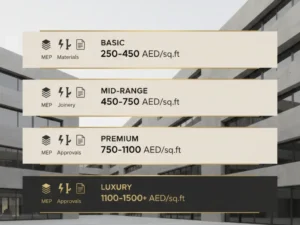 What Affects Interior Fit-Out Cost in the UAE? 2026 Price Guide
 Top Interior Design Companies in Dubai (2026 Edition)
 Why Your 2BHK Feels Smaller After Furnishing (Designer Layout Breakdown + Fixes)
 How to Design Around Low Ceilings in Older Dubai Apartments (2026 Guide)
 Why Your Apartment Looks Cheap — And How to Fix It in 1 Week
 Where to Buy Budget Interiors in the UAE That Don’t Look Cheap
 Why Your Home Feels Stressful: 12 Interior Design Mistakes That Create Anxiety (and How to Fix Them)
 Functional vs Aesthetic Interior Design: What Matters More?
0 Comments