
You finally furnished your 2BHK. The sofa is in place, the bed looks great, storage is sorted — everything should feel complete.
But instead, your home feels… smaller.
Rooms feel tighter, movement feels restricted, and somehow the same space that once felt open now feels cramped. If you’re wondering “why my 2BHK feels smaller after furnishing”, you’re not alone — and more importantly, it’s not just about having too much furniture.
This is a layout problem, not a space problem.
Let’s break it down like a designer would.
Why a Furnished Home Feels Smaller Than an Empty One
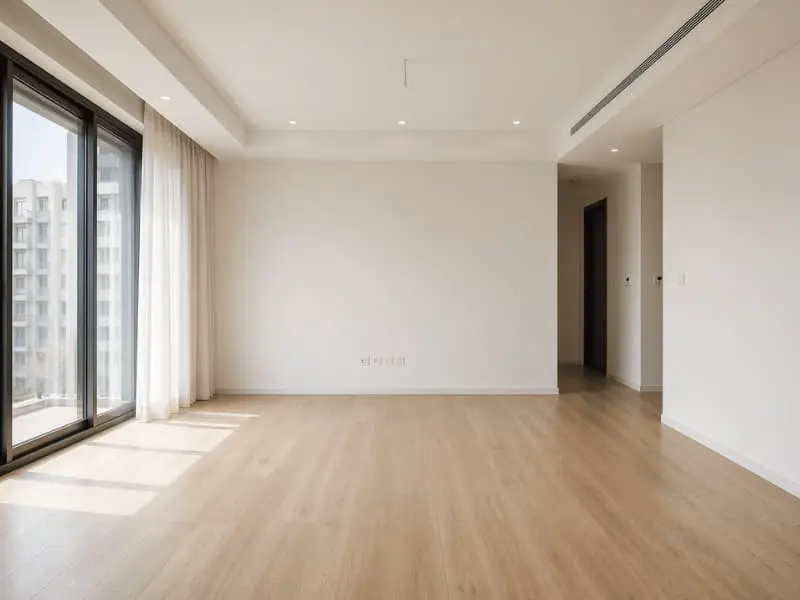
Before furniture, your home benefits from what designers call visual openness.
Empty rooms:
- Have uninterrupted sightlines
- Allow free movement
- Feel larger due to lack of visual boundaries
Once you add furniture:
- You introduce visual blocks
- Movement paths get defined (and often restricted)
- The brain starts perceiving “zones” instead of open space
👉 The result: the same square footage feels significantly smaller.
7 Layout Mistakes That Make Your 2BHK Feel Cramped
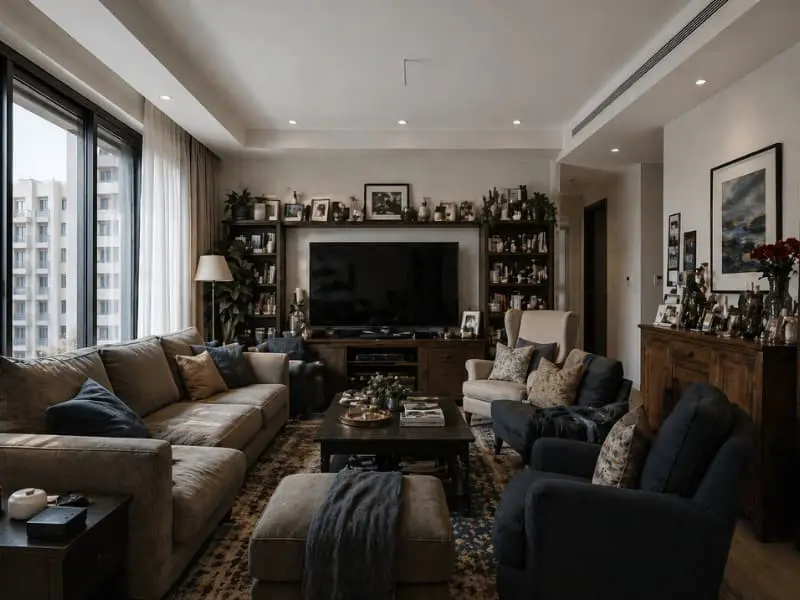
1. Blocking Natural Pathways
One of the most common mistakes in small apartments is disrupting how people naturally move through space.
If you have to “walk around” furniture awkwardly, your layout is working against you.
2. Oversized Furniture for the Room Scale
That 3-seater sofa might look perfect in a showroom — but in your living room, it dominates everything.
👉 Scale mismatch = instant cramped feeling
3. Pushing Everything Against Walls
Ironically, placing all furniture against walls doesn’t make a room feel bigger.
It actually:
- Flattens the space
- Removes depth
- Makes the center feel empty but useless
4. Too Many Focal Points
TV unit, artwork, statement chair, bold rug — all competing for attention.
Your eye doesn’t know where to rest, making the room feel visually cluttered.
5. Ignoring Vertical Space
When everything sits low and horizontal, the room feels compressed.
Walls are underutilized, and the ceiling feels lower than it is.
6. Poor Lighting Layers
Single overhead lighting creates harsh shadows and flatness.
Good lighting adds depth — bad lighting shrinks space visually.
7. Visual Clutter (Even When Organized)
Too many items — even neatly arranged — create “visual noise.”
Your brain reads it as congestion.
Empty vs Furnished Layout: What Actually Changed?
The biggest difference isn’t furniture — it’s perception.
| Before (Empty) | After (Furnished) |
|---|---|
| Open movement | Restricted pathways |
| Clear sightlines | Visual interruptions |
| Undefined zones | Overcrowded zones |
| Airy feel | Dense feel |
👉 Furnishing introduces boundaries, and poor layout makes those boundaries feel tighter than they need to be.
How to Make Your 2BHK Feel Spacious Again
Now the important part — fixing it.
1. Create Clear Walking Paths
Ensure at least 2–3 feet of walking space in key areas.
Movement flow = perceived space.
2. Use Floating Furniture
Instead of pushing everything against walls:
- Pull sofas slightly inward
- Create intentional zones
This adds depth and breathing space.
3. Choose Multi-Functional Furniture
Think:
- Storage beds
- Nesting tables
- Foldable desks
Less furniture = more openness.
4. Reduce Visual Noise
Stick to:
- 2–3 main colors
- Minimal décor clusters
Your eyes need rest to perceive space.
5. Use Mirrors Strategically
- Reflect light
- Extend sightlines
👉 Instantly make rooms feel larger
6. Layer Your Lighting
Combine:
- Ambient (ceiling)
- Task (lamps)
- Accent (wall lights)
Lighting creates depth — depth creates spaciousness.
7. Think Vertical
Use:
- Tall shelves
- Vertical panels
- Curtains from ceiling to floor
This draws the eye upward and expands perceived height.
How Designers Actually Plan Small Spaces
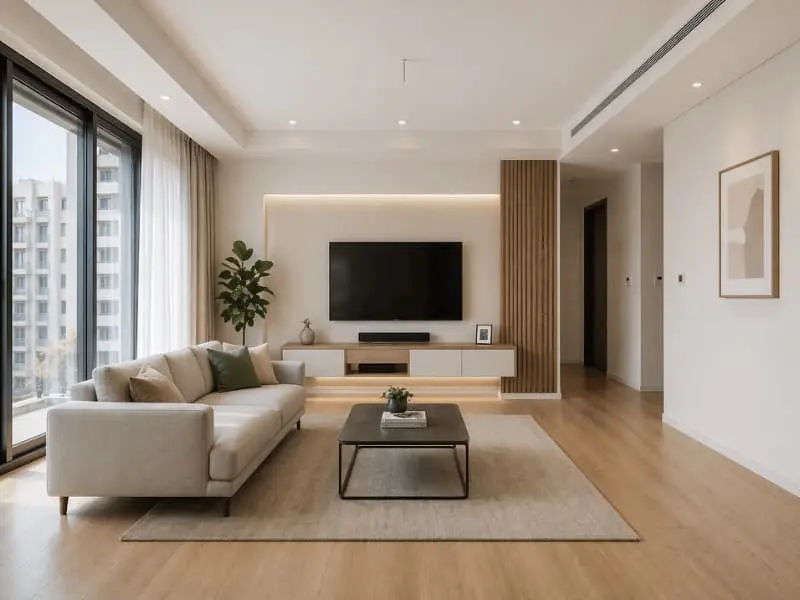
Professional designers don’t just “place furniture.”
They think in terms of:
→ Zoning
Each area has a clear purpose without overlap.
→ Sightlines
What you see from the entrance matters more than total space.
→ Negative Space
Empty space is not wasted space — it’s what makes a room feel breathable.
Quick Checklist: Fix Your Layout Today
- Are pathways clear?
- Is any furniture too large?
- Is everything pushed to walls?
- Is there visual clutter?
- Is lighting layered?
If you answered “yes” to 2–3 of these — that’s why your home feels smaller.
FAQs
Why does my room feel smaller with furniture?
Because furniture creates visual and physical boundaries that reduce openness and disrupt movement flow.
How do I arrange furniture in a small 2BHK?
Focus on clear pathways, proper scale, minimal clutter, and defined zones instead of filling every corner.
What type of furniture makes a room look bigger?
Low-profile, multi-functional, and legged furniture that allows visibility underneath.
Should furniture touch walls in small rooms?
Not always. Slightly pulling furniture away from walls can create depth and improve layout balance.
Final Thought
If your 2BHK feels smaller after furnishing, the problem isn’t your home — it’s how the space is being used.
With a few layout adjustments, you can make the same apartment feel lighter, bigger, and more comfortable — without removing everything you just bought.
Related posts:
 How to Design a Playroom That Actually Works for Your Home
 How to Choose the Perfect Colors for Your Living Room | Room Color Guide
 Top 10 Reasons to Opt for a Hinged Door Wardrobe in Your Space
 Matching Lifestyles with Glass Wardrobes: Who Should Opt for Them?
 Interior Design Ideas to Refresh Your Home in 2025
 Transform Your Hallway: Smart Storage and Design Ideas
 Top Curtain Styles That Instantly Upgrade Any Room
 Creative Headboard Designs to Transform Your Bedroom
 Tips for Designing a Pet-Friendly Home Interior
 How to Maximise Space in Small Dubai Apartments (small apartment design Dubai)
 How to Choose the Right Wall Art to Elevate Your Interior Design
 Why wardrobes in Dubai villas smell musty — interior design solutions
0 Comments