The UAE—especially cities like Dubai and Abu Dhabi—continues to be one of the world’s fastest-growing markets for interior design and fit-out. Whether it’s a new office in Dubai Marina, a retail store in Downtown Dubai, or a villa renovation, more people today want to know one thing:
“What truly affects interior fit-out cost in the UAE?”
The short answer?
Materials, scope, MEP, approvals, labor expertise, design complexity, and timeline.
But the real answer goes deeper—because every project is a combination of technical, aesthetic, and regulatory elements.
This guide breaks down everything that impacts interior fit-out cost in the UAE so you can plan your project confidently, set a realistic budget, and avoid unexpected expenses.
1. What Is an Interior Fit-Out in the UAE?
“Interior fit-out” refers to turning an empty, shell, or partially completed space into a fully functional, ready-to-use environment.
This includes:
- Space planning & layout zoning
- Flooring, ceilings & wall finishes
- Lighting design & electrical points
- MEP (Mechanical, Electrical, Plumbing)
- AC ducting & HVAC optimization
- Fire-fighting & emergency systems (DCD compliant)
- Custom joinery & furniture
- IT, AV & security installations
- Final approvals & handover
Depending on the building and client requirements, projects typically fall under:
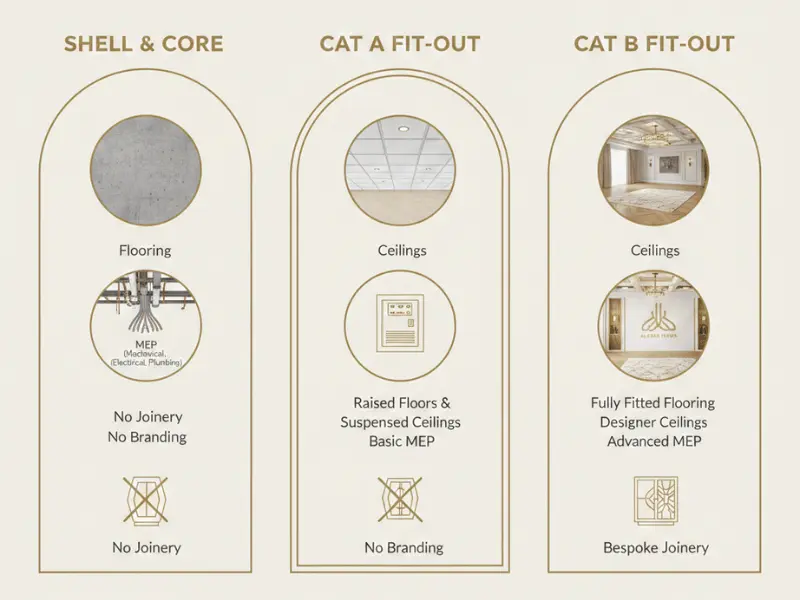
Shell & Core Fit-Out
Complete build-out from zero — highest cost.
CAT A Fit-Out
Basic finishing: flooring, ceilings, MEP preparations.
CAT B Fit-Out
Full customization: joinery, branding, furniture, partitions, décor — most common for offices and commercial spaces.
2. Interior Fit-Out Cost in the UAE (2026 Average Prices)
Costs vary based on project type, finishes, and complexity.
Below is the updated 2026 benchmark:
| Fit-Out Level | Average Cost (AED/sq.ft) | Suitable For |
| Basic / Functional | 250 – 450 | Small offices, admin spaces, budget homes |
| Mid-Range Corporate | 450 – 750 | Agencies, SMEs, clinics, retail |
| Premium Corporate | 750 – 1,100 | Law firms, consulting offices, luxury retail |
| Luxury High-End | 1,100 – 1,500+ | Executive suites, hotels, branded offices |
High-end materials, advanced MEP changes and custom joinery push cost into the upper ranges.
3. The Biggest Factors That Affect Fit-Out Cost in the UAE
This is where most of your budget shifts—positively or negatively.
1. Project Size & Scope of Work
This is the foundation of your cost.
Larger areas require:
- More materials
- More labor
- More MEP points
- Longer execution time
But economies of scale also apply—big projects often get a lower per-sq.ft rate.
Your cost increases if:
- You’re starting from Shell & Core
- You’re adding structural modifications
- You’re re-routing MEP lines
- You’re requesting custom-built elements
Your cost decreases if:
- You keep the existing layout
- You retain existing MEP points
- You opt for modular partitions
2. MEP Works (The #1 Cost Driver)
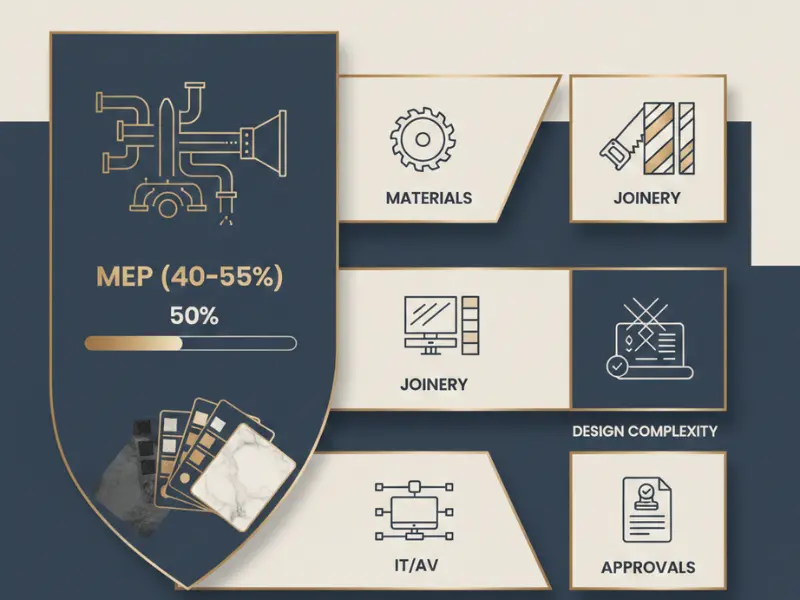
Across every UAE fit-out project, MEP accounts for 40–55% of the total budget.
This includes:
- AC ducting, FCUs & HVAC recalibration
- Electrical wiring, DB upgrades, socket points
- Plumbing works for pantries, washrooms
- Fire-Fighting system (DCD compliant)
- Emergency lighting & exit signage
- Fresh air & exhaust systems
- Low-voltage systems
Why MEP is expensive:
- Requires certified engineers
- Must comply with Dubai Civil Defense
- Involves technical inspections & approvals
- Uses specialized equipment & materials
If you can reuse existing MEP, your fit-out cost drops significantly.
3. Materials & Finishes (20–40% of Total Cost)
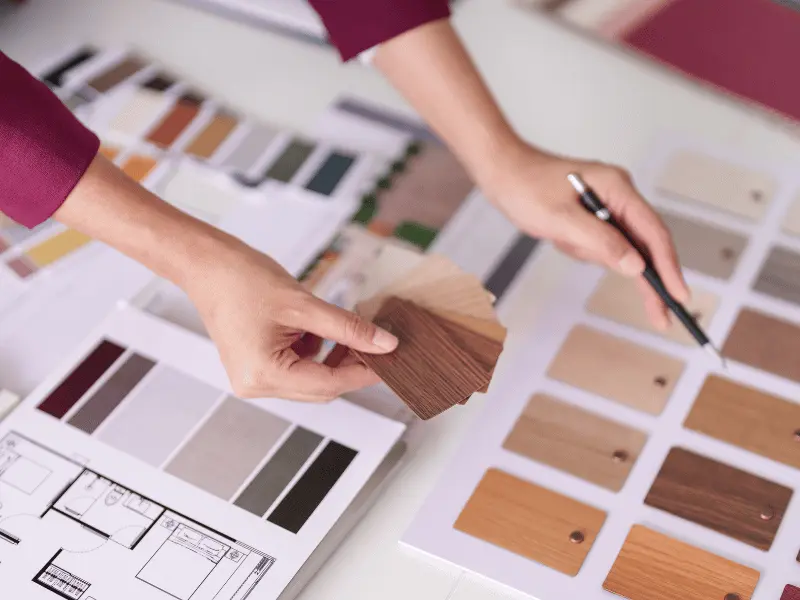
Material choice can make or break your budget.
High-cost materials include:
- Natural marble
- Walnut & oak veneer
- Acoustic wall cladding
- Fluted wooden panels
- Designer light fixtures
- Luxury porcelain tiles
Budget-friendly alternatives include:
- HPL panels
- Commercial carpet tiles
- Laminate flooring
- Standard gypsum ceilings
- LED panel lights
Your design intent defines your cost—but smart material selection can keep aesthetics high and spending low.
4. Custom Joinery & Built-In Furniture
Custom elements elevate the space—but they’re expensive.
Common joinery items:
- Reception desks
- Boardroom tables
- Executive cabinets
- Pantry counters
- Acoustic panels
- Storage & shelving systems
Premium joinery uses veneer, solid wood, metal trims, LED integration—each adds cost.
Budget joinery uses HPL, MDF, and laminates.
5. Design Complexity
More complex = more expensive.
Examples of high-complexity design:
- Curved walls or ceilings
- Floating feature elements
- Advanced lighting effects
- Acoustic engineering
- Smart office integration
- Bespoke branded interiors
Simple, modular layouts reduce both cost and timeline.
6. IT, AV & Smart Technologies
Modern UAE office spaces require tech from Day 1:
- Access control & RFID
- CCTV
- Structured cabling (Cat6/Cat7)
- Server room fit-out
- Smart lighting & BMS integration
- Video conferencing systems
Tech adds 5–10% to your total budget.
7. Authority Approvals (DCD, DEWA, DMCC, DIFC)
Approvals in the UAE are mandatory and cost money.
Depending on the building & location, you may need:
- DCD — Dubai Civil Defense
- DEWA — Electricity & Water
- Dubai Municipality
- Trakhees
- DMCC
- DIFC
- TECOM / DSOA landlord approvals
Approval fees, revision fees, and compliance requirements can add 2–5% to the budget.
8. Contractor Expertise & Labor Quality
One of the most overlooked—but most important—factors.
Experienced contractors cost more because:
- They deliver faster
- They minimize rework
- They manage approvals
- They provide quality joinery
- They prevent delays and hidden costs
Hiring cheap contractors often leads to:
❌ delays
❌ poor finishing
❌ compliance issues
❌ rework expenses
Which in the end… costs more.
9. Timeline Constraints (Fast-Track = Higher Cost)
The UAE has many fast-track projects (especially in Dubai).
If you need delivery in:
- 4–6 weeks → High cost (overtime, extra labor teams)
- 8–12 weeks → Normal cost
- 12–24 weeks → Cost-efficient
Speed affects manpower allocation → manpower affects cost.
4. Interior Fit-Out Timeline in the UAE
Here is the typical workflow:
| Phase | Duration | Activities |
| Concept Design | 1–2 weeks | Layouts, 3D visuals, material selection |
| Technical Drawings & Approvals | 1–3 weeks | MEP drawings, DCD submissions, landlord approvals |
| Fit-Out Execution | 6–12 weeks | Civil works, MEP, ceilings, flooring, joinery |
| Snagging & Handover | 1 week | Testing, commissioning, cleanup |
Total Duration: 8–16 weeks
Large corporate or luxury projects can extend to 20–24 weeks.
5. Interior Fit-Out Cost Breakdown (% of Budget)
| Component | Cost Percentage |
| MEP Works | 40–55% |
| Joinery + Furniture | 20–30% |
| Flooring, Ceilings, Walls | 10–15% |
| Lighting + Electrical | 10–15% |
| IT / AV / Security | 5–10% |
| Authority Approvals | 2–5% |
This breakdown helps you understand exactly where your money goes.
6. How to Reduce Fit-Out Cost Without Compromising Quality
Here are cost-saving strategies used by top UAE designers:
✔️ Use modular partitions instead of full gypsum
✔️ Choose commercial-grade flooring instead of marble
✔️ Retain existing MEP lines
✔️ Avoid unnecessary ceiling redesign
✔️ Use smart LED panels instead of decorative lights
✔️ Choose HPL over natural veneer
✔️ Avoid scope creep (biggest hidden cost)
Smart planning saves more money than cheap materials.
7. Commercial vs Residential Fit-Out Costs in the UAE
Commercial Projects (Offices, Clinics, Retail)
Higher costs due to:
- MEP intensity
- Fire system requirements
- Smart IT setups
- Branding
- Approvals
Residential Projects (Villas, Apartments)
Costs vary based on:
Residential projects tend to be more design-driven; commercial projects are more technical.
8. Why UAE Companies Invest in Better Fit-Outs
A quality interior improves:
- Productivity
- Brand perception
- Employee retention
- Client experience
- Workspace comfort
- Long-term asset value
In a competitive UAE market, interiors directly influence business performance.
Conclusion: Understanding What Affects Interior Fit-Out Cost in the UAE
Interior fit-out cost in the UAE depends on materials, MEP, design complexity, approvals, labor skill, and project timeline.
By planning ahead, setting clear expectations, and choosing the right contractor, you can achieve:
- A fully compliant project
- A high-quality finish
- A realistic budget
- A smooth, delay-free timeline
Whether you’re renovating a villa or building a corporate office in Dubai, understanding these cost factors helps you make smarter decisions and avoid unnecessary overspending.
Related posts:
 How to Maximise Space in Small Dubai Apartments (small apartment design Dubai)
 How to Design a Playroom That Actually Works for Your Home
 How to Choose the Perfect Colors for Your Living Room | Room Color Guide
 Should I Hire an Interior Designer or Do It Myself?
 How to Plan an Interior Design Budget Without Overspending
 How to Choose the Right Wall Art to Elevate Your Interior Design
 How to Maximize Storage in Small Bedrooms (Clever Space-Saving Ideas)
 How to Choose the Right Bathroom Accessories for a Modern Home
 Top Interior Trends 2026: What’s Shaping UAE Homes This Year
0 Comments