
If you’ve ever stood in the doorway of your child’s bedroom in a Dubai apartment wondering how to make it feel bigger, safer, and more magical — you’re not alone. Kids room design in Dubai comes with a unique set of challenges: compact floor plans, year-round indoor living, and the pressure of creating a space that works for sleeping, studying, and playing all at once.
The good news? With the right approach, even a modest bedroom in a Dubai apartment can become a thoughtfully designed space your child will love — and that you’ll actually enjoy looking at too. Here’s how to do it.
1. Start with a zoning plan
Before choosing a single piece of furniture, map out your room’s zones. Most kids’ rooms need at least three functional areas: a sleep zone, a play zone, and a study zone. In Dubai apartments — where bedrooms often range from 9 to 14 square metres — these zones need to be cleverly layered rather than spread out.
Take note of fixed elements like AC vents, window positions, and door swings. Dubai apartments commonly have split AC units along one wall, which can limit furniture placement more than you’d expect. A good interior designer will account for airflow when positioning beds and desks to ensure your child isn’t sleeping directly in the cold draft or studying in a warm corner.
2. Choose a colour palette that works hard
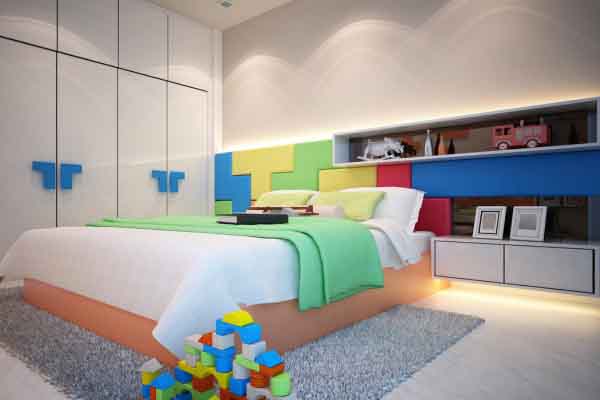
Colour is one of the most powerful tools in kids room design, but it’s also where many parents go wrong. Bold primary colours on every wall can make a small room feel chaotic and even harder to keep calm at bedtime.
For Dubai apartments, the smart approach is a light, neutral base — warm whites, soft greiges, or pale sage — with colour introduced through accessories, bedding, and one feature wall. This keeps the room feeling airy and spacious while still giving your child personality and visual interest.
If you’re renting (as many expat families in Dubai are), peel-and-stick wallpaper panels are a brilliant solution. You can create a stunning jungle, geometric, or sky-themed feature wall without touching the paint — and remove it when you leave.
3. Prioritise smart storage from day one
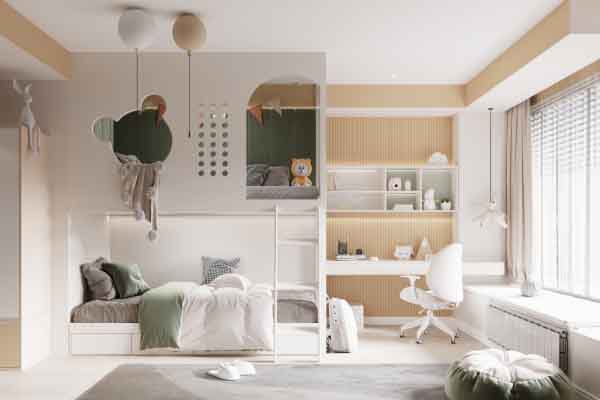
Nothing makes a small kids’ room feel smaller than clutter. In Dubai apartment living, where storage space is always at a premium, building a smart storage strategy into the room design from the outset is non-negotiable.
Think vertically. Floor-to-ceiling shelving units, wall-mounted book ledges, and over-door organisers all take advantage of vertical space that typically goes unused. Under-bed storage is another essential — look for beds with built-in drawers or use low-profile storage boxes on casters for easy access.
Multi-functional furniture is your best friend in compact spaces. Ottoman storage benches double as seating and toy storage. Loft beds free up an entire footprint underneath for a desk or reading nook. Wardrobe organisers — easily added to most Dubai apartment built-ins — dramatically increase usable clothing storage.
4. Select furniture that grows with your child
One of the biggest mistakes parents make is buying age-specific furniture that their child outgrows in two years. In a city like Dubai where furniture replacement can be expensive, investing in adaptable pieces from the start saves significant money in the long run.
Look for convertible cribs that transition to toddler beds and then full singles, extendable desks with adjustable-height legs, and wardrobe systems with moveable rails and shelves. Neutral-framed furniture in wood tones or white can be re-styled with new accessories as your child’s tastes evolve — without needing to replace the main pieces.
On the safety front, always choose furniture with rounded corners and non-toxic, low-VOC finishes — especially important in Dubai’s climate where windows are often closed and ventilation is limited to AC airflow.
5. Design the lighting thoughtfully
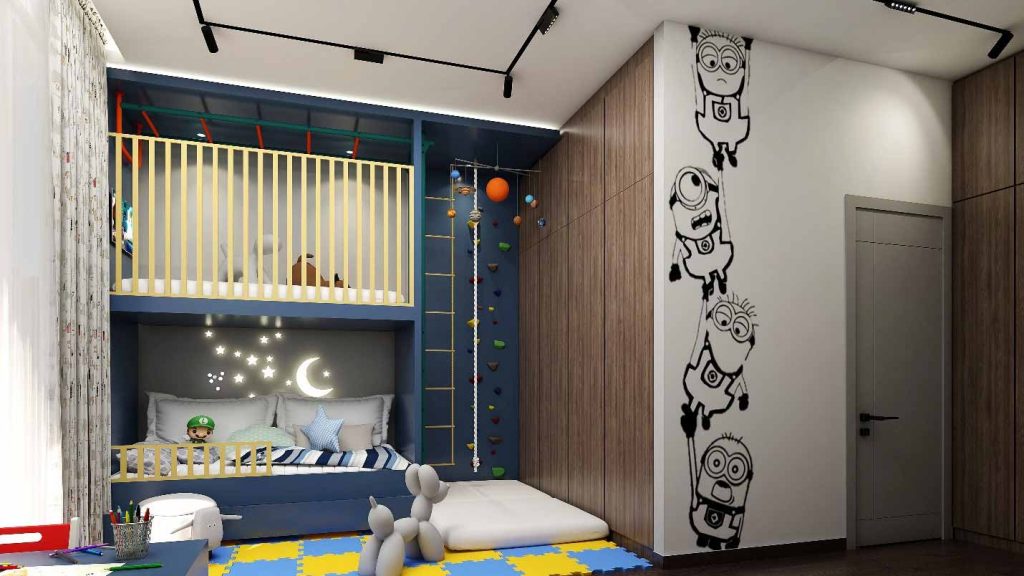
Lighting in a children’s bedroom in Dubai needs to serve multiple purposes: bright task lighting for homework, warm ambient light for wind-down, and blackout capability for sleep — particularly important given Dubai’s intense early morning sunlight and the fact that many families keep late social schedules.
Install blackout blinds or curtains as a baseline. Layer on a ceiling fixture for general light, a dedicated desk lamp for studying, and a dimmable bedside lamp or plug-in night light for bedtime. Smart bulbs that can shift from bright daylight to warm amber tones are an increasingly popular choice in Dubai’s tech-savvy household market.
6. Add a theme — but keep it timeless
Themes bring personality and joy to a kids’ room, but the most common regret parents have is going too specific too soon. A fully branded superhero room works brilliantly at age four and feels embarrassing by age eight.
Instead, think in terms of broader themes: adventure, nature, space, ocean, or art. These translate beautifully across age groups and can be refreshed with new accessories without a full redesign. In Dubai, nature-inspired themes — forest, botanical, desert — work particularly well as a gentle nod to the environment outside and bring a calming, organic quality to an otherwise urban apartment setting.
7. Create indoor play space intentionally
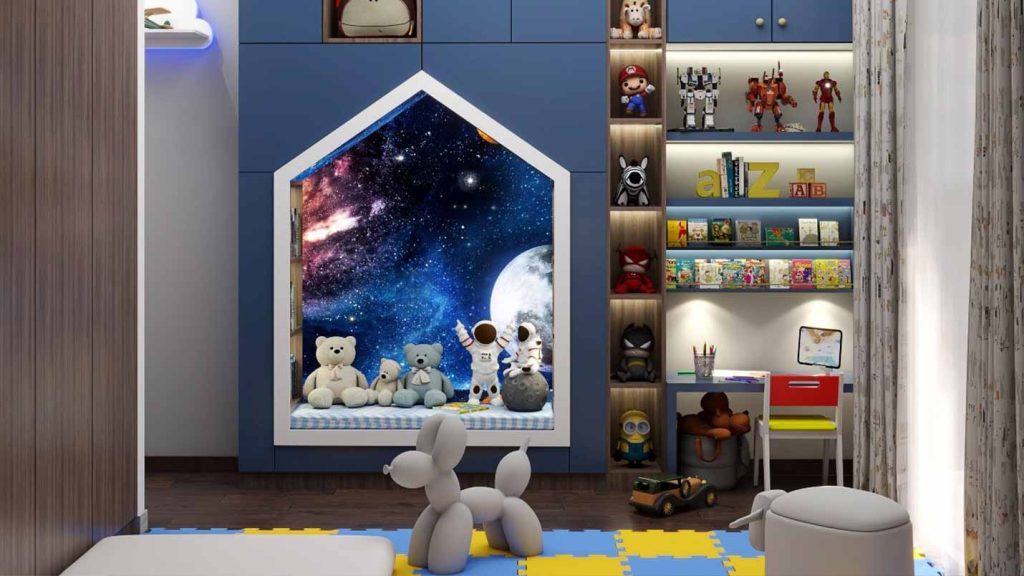
This is a consideration unique to Dubai: for roughly six months of the year, outdoor play is limited due to extreme heat. Your child’s bedroom isn’t just a bedroom — it’s their primary play environment for much of the year.
Designing an open floor area for active play — even a small one — is worth prioritising over an extra furniture piece. Use rugs to define and soften play areas. Consider wall-mounted activity boards, a small reading tent or canopy corner, or a fold-down art table that tucks away when not in use.
8. Think renter-friendly from the start
A large proportion of Dubai families are expats in rental apartments, which means permanent changes — drilling into walls extensively, painting, or installing fixed joinery — can be either prohibited or costly to reverse.
The good news is that renter-friendly design has come a long way. Removable wallpaper, freestanding shelving systems, adhesive wall hooks rated for significant weight, and modular furniture that can be reconfigured and moved all let you create a beautifully designed room without touching the walls in any permanent way.
When wall anchoring is necessary for safety — securing a tall bookcase, for example — use the smallest possible fixings, keep them minimal, and document them so repairs are straightforward at the end of tenancy.
9. Don’t forget acoustics
Dubai apartment living often means shared walls, and children are not known for being quiet. Adding soft furnishings — thick rugs, curtain panels, upholstered headboards, and fabric wall art — helps absorb sound and makes the room feel cosier at the same time. This benefits both your neighbours and your child’s sleep quality.
Final thoughts
Great kids room design in Dubai is about balancing imagination with practicality. The best children’s bedrooms in Dubai apartments are ones that feel playful and personal, but that are also safe, easy to maintain, and flexible enough to evolve as your child grows.
Whether you’re starting from scratch or refreshing an existing room, working with an experienced interior designer who understands the specific realities of Dubai apartment living — the climate, the layouts, the renting considerations — makes a significant difference to the final result.
Related posts:
 G-Shaped Kitchen Layout
 Choosing the Best Windows for Energy Efficiency
 Transform Your Kitchen with Smart Storage Solutions
 Make Your a Studio Apartment Feel Like a 2-Bedroom | Smart Design Tricks
 How to Choose the Right Kitchen Backsplash for Your Home
 Modern vs Classic Interior Design (2026 Guide) | Expert Interior Design Company Insights
 Why Dubai Apartments Get Mould Even With AC On — Interior Design Reasons & Fixes
 Best Flooring Options for Dubai Fit-Outs: SPC vs Porcelain vs Vinyl (2026 Guide)
 Modern vs Classic Interior Design: Which Is Right for You in Dubai
 How to Achieve Energy Efficient Home Design Dubai: A Complete Guide for 2026
 Why Some Rooms Are Hotter in Dubai Homes: Layout & Design Mistakes
 Kitchen, Wardrobe & Vanity: How Custom Joinery Creates a Cohesive Home
0 Comments