
If you’ve ever walked into your living room, stared at every wall, and thought “none of these make sense for a TV,” you’re not alone. Open floor plans, oversized windows, awkward layouts, and multipurpose spaces have made traditional TV placement increasingly difficult.
The good news? Interior designers have already solved this problem — and often in ways that look better than the standard “TV-on-the-wall” setup.
In this guide, we’ll go beyond the usual advice and explore practical, designer-approved solutions for TV placement when no wall is ideal. You’ll also find real-world case insights, layout psychology, and overlooked strategies that most blogs never talk about.
Why “No Ideal Wall” Happens (And Why It’s Not a Problem)
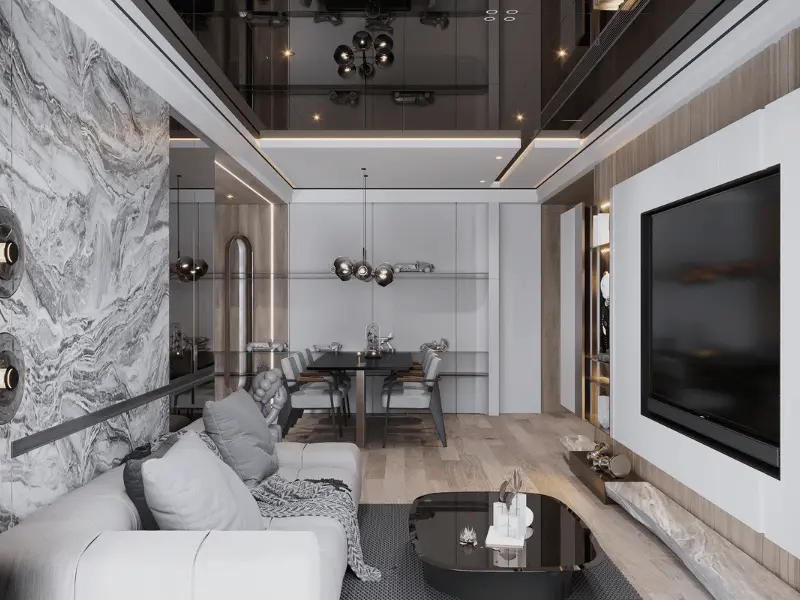
Before jumping into solutions, it helps to understand why this issue is so common.
Modern homes often include:
- Floor-to-ceiling windows
- Open-concept layouts
- Minimal interior walls
- Multi-use living spaces
These features are great for light and flow, but they remove the obvious TV location.
Here’s the key mindset shift:
The TV doesn’t need to belong to a wall — it needs to belong to the layout.
Once you think in terms of zones instead of walls, the options expand dramatically.
1. The Floating TV Wall (Best for Open Floor Plans)
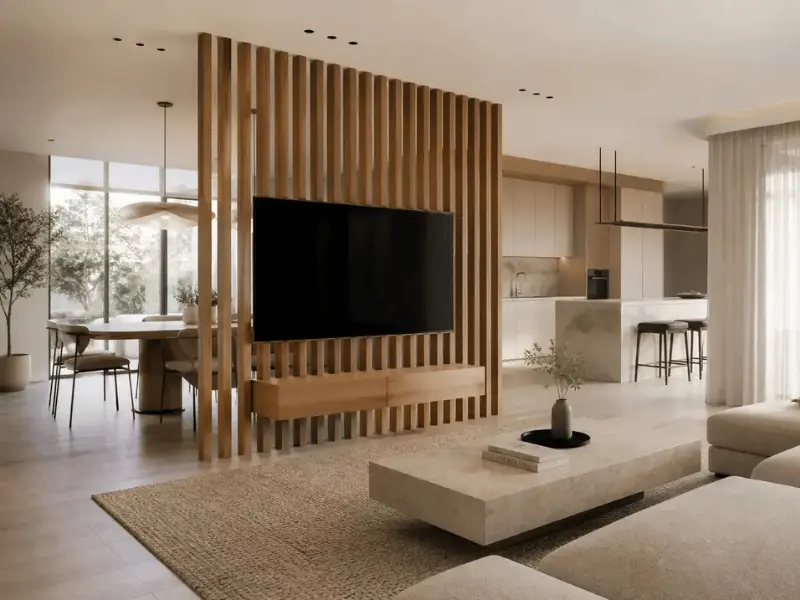
One of the most effective designer solutions is to create a floating partition wall.
Instead of using an existing wall, you build a slim structure that:
- Divides the space
- Holds the TV
- Maintains openness
Why it works
- Defines living zones without closing off space
- Allows optimal viewing angles
- Creates symmetry where none existed
Design tips
- Keep it 10–15 cm thick to avoid bulk
- Add shelving or storage on the back side
- Use wood slats or glass to maintain light flow
2. TV on a Stand in the Middle of the Room (Yes, Really)
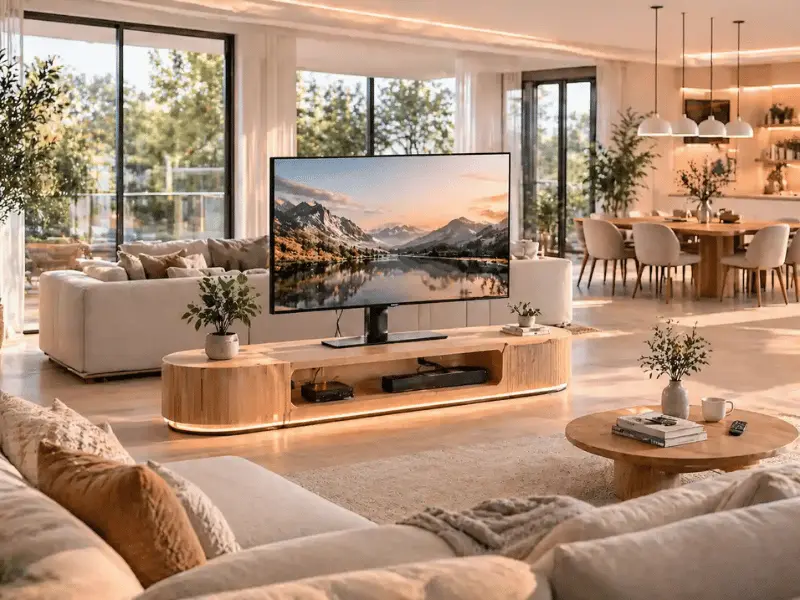
This is one of the most underused but powerful solutions.
A freestanding TV unit or easel stand can be placed away from walls entirely.
Why it works
- Complete flexibility in positioning
- Works in awkward or asymmetrical layouts
- Doubles as a design statement
Designer trick
Use a low-profile console behind the TV to hide cables and anchor the setup visually.
When to use it
- Studio apartments
- Living/dining combined spaces
- Rooms with too many windows
3. Corner TV Placement (But Done Right)
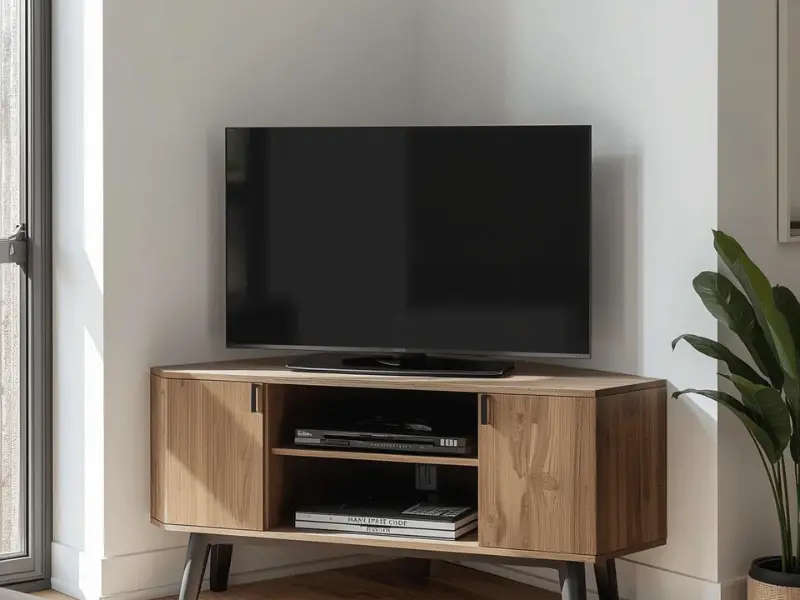
Corners are often dismissed — but when designed intentionally, they can be one of the best solutions.
The mistake most people make
Placing the TV awkwardly at an angle without adjusting furniture.
The designer approach
- Use a corner-mounted bracket
- Float the sofa diagonally or slightly angled
- Anchor with a rug to define the layout
Why it works
- Utilizes “dead space” efficiently
- Avoids window glare
- Keeps main walls free for decor
4. Mounting the TV in Front of a Window (With Smart Adjustments)
This sounds wrong — but in many modern homes, it’s actually the best option.
How designers make it work
- Use a ceiling-mounted pole or drop-down bracket
- Install motorized blinds behind the TV
- Choose anti-glare screens
Why it works
- Solves layout conflicts instantly
- Preserves wall space for art or storage
- Works especially well in high-rise apartments
Key consideration
Light control is critical. Without it, reflections will ruin the experience.
5. Built-In Media Units on Partial Walls
Even if no full wall exists, you may have partial walls or columns.
Designer strategy
Turn small architectural elements into functional features:
- Extend a column into a media wall
- Build cabinetry around half-walls
- Use vertical panels to frame the TV
Why it works
- Makes use of overlooked structures
- Creates a custom, high-end look
- Improves storage
6. The Rotating TV Solution (Dual-Zone Living)
This is where design meets engineering.
A rotating TV mount allows the screen to face different areas.
Ideal for
- Living + dining combos
- Kitchen + lounge spaces
- Open-plan homes
Benefits
- One TV serves multiple zones
- Reduces clutter
- Maximizes usability
7. Projector Instead of TV (The Radical Alternative)
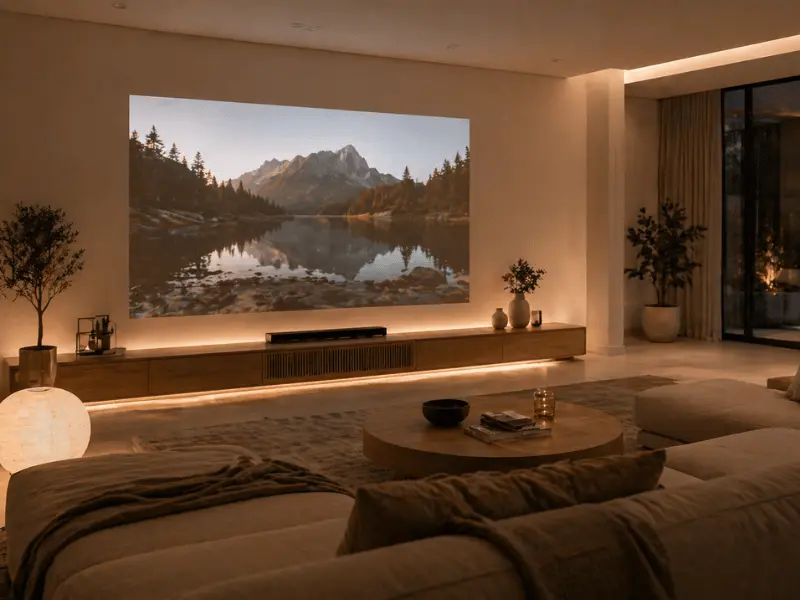
Sometimes the best solution is to remove the TV altogether.
Why designers recommend this
- No permanent visual clutter
- Works on blank walls, ceilings, or retractable screens
- Ideal for minimalist interiors
Modern upgrades
- Ultra-short-throw projectors
- Ambient light rejecting screens
- Hidden ceiling mounts
When to consider
- Luxury living rooms
- Minimalist homes
- Spaces where aesthetics matter more than casual viewing
The Overlooked Factor: Viewing Psychology
Most blogs talk about where to place a TV — few talk about how people actually use it.
Here’s what designers consider:
1. Natural sightlines
People prefer not to turn their heads too far while watching.
2. Conversation vs. TV balance
In many homes, the living room is used more for socializing than watching TV.
3. Visual hierarchy
The TV doesn’t always need to be the focal point.
A well-designed room lets the TV disappear when not in use.
This is why many modern layouts position the TV slightly off-center rather than dominating the space.
Common Mistakes to Avoid
Even with good ideas, execution matters.
- Forcing symmetry
Trying to center the TV on a wall that doesn’t make sense
- Ignoring glare
Placing the TV opposite large windows without treatment
- Overcrowding furniture
Not adjusting seating to match TV placement
- Prioritizing aesthetics over comfort
A beautiful setup that’s uncomfortable to watch will fail long-term
How to Choose the Right Solution (Quick Framework)
Ask yourself these 3 questions:
- Where do I naturally sit most often?
- What role does TV play — primary or occasional?
- What constraints matter most — light, space, or layout?
Your answers will guide the best solution.
Final Thoughts: Stop Looking for a Perfect Wall
The idea of a “perfect TV wall” is outdated.
Modern interior design is about flexibility, adaptability, and intention.
Whether it’s a floating divider, a freestanding setup, or a rotating mount, the best solution is the one that works with your space — not against it.
If anything, having no ideal wall forces you into more creative (and often better) design decisions.
Related posts:
 19 Modern and Luxury Black and White Living Room Ideas
 How to Decorate a Black and White Bedroom for Timeless Elegance
 Built-in TV Units: The Perfect Blend of Storage and Style
 Top Dining Table Brands in the UAE: A Buyer’s Guide
 A Guide to Choosing the Best Curtains for Light Control and Privacy
 How to Avoid Wasting Money When Furnishing Your First Apartment
0 Comments