
Working from home in Dubai sounds simple until the first important video call starts while a neighbour is drilling, the television is playing in the living room, the kitchen extractor is running, or traffic noise is coming through the windows.
The problem is not always your desk or chair. The way a home is planned, divided and finished can determine how much noise enters your workspace, how much sound escapes it, and how private you feel while working.
This is particularly important in Dubai apartments, where open-plan layouts, floor-to-ceiling glazing, hard flooring and compact rooms are common. A workspace that looks beautiful in photographs can still be acoustically uncomfortable and visually exposed.
The good news is that you do not necessarily need a dedicated office or expensive soundproofing project.
Here are 10 interior design solutions that can make working from home in Dubai quieter, more private and more comfortable.
1. Choose the quietest location before choosing the furniture
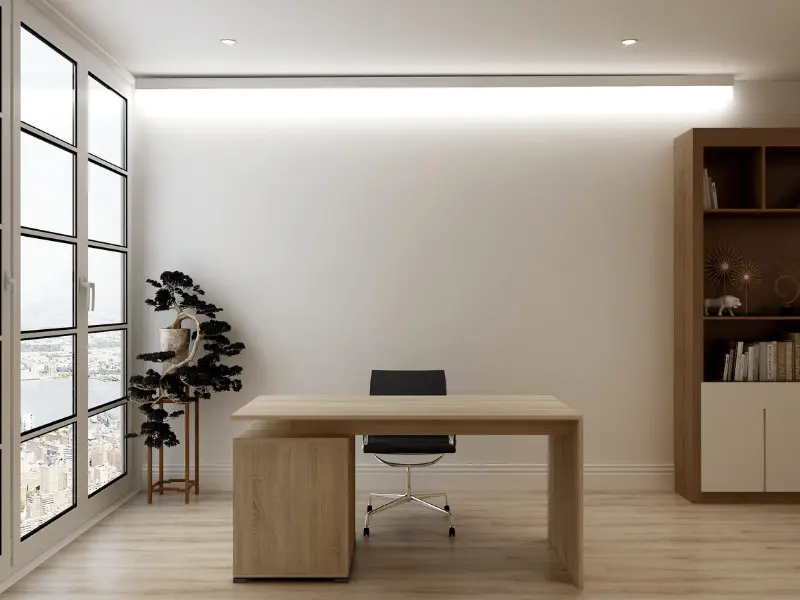
The first home-office decision should be where the workspace goes, not which desk you buy.
If you have a spare bedroom, that is usually easier to control than a desk placed beside the kitchen or living room. But even within a single room, location matters.
Avoid positioning the desk directly beside:
- The entrance door
- The kitchen
- The television
- A frequently used corridor
- A shared bedroom wall where possible
- Noisy mechanical equipment
- Large untreated windows facing busy roads
Instead, look for a position that gives you some distance from the home’s main activity zones.
For apartments, this simple planning decision can be more effective than adding decorative acoustic products later.
Design principle: solve the noise path with space planning first; use materials to improve what remains.
2. Give your home office a door whenever possible
An open desk in a living room may work for occasional laptop use, but it becomes frustrating when your job involves meetings, confidential conversations or long periods of concentration.
A door creates a physical boundary between work and domestic life.
If you are converting a spare bedroom, study or existing room into an office, a properly fitted door should be part of the acoustic strategy.
A solid-core door with good perimeter seals can perform considerably better than a lightweight hollow-core door. The gap underneath also matters: sound can travel through surprisingly small openings.
This does not mean you need to turn your home into a recording studio. The objective is simply to create a stronger separation between the office and the rest of the home.
For renters, replacing a door may not be practical. In that case, consider a freestanding screen, thick curtain divider or furniture arrangement that creates a secondary boundary.
3. Treat the room’s echo, not just the outside noise
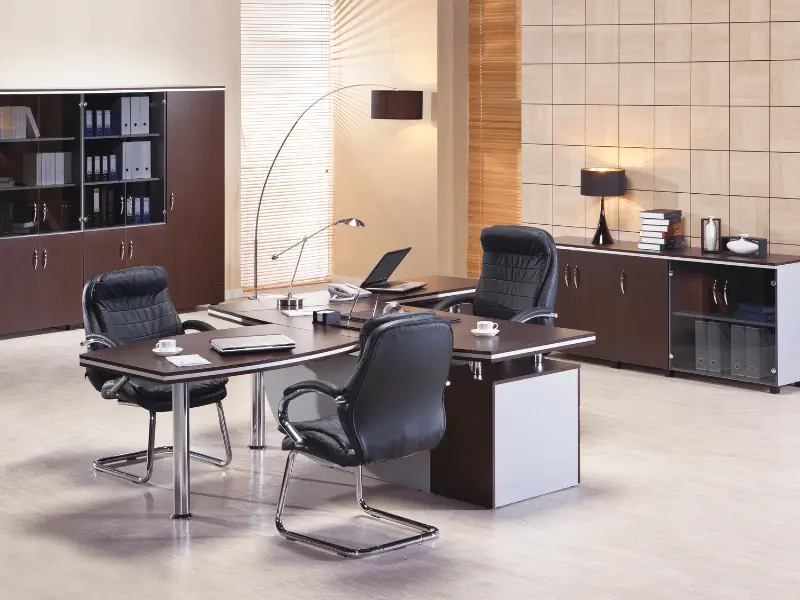
One of the biggest mistakes in home-office design is confusing sound absorption with soundproofing.
They are not the same.
Soundproofing attempts to reduce sound transmission from one space to another. Acoustic absorption reduces reflections inside the room.
A room with marble or porcelain flooring, bare walls, glass windows and minimal furniture can sound surprisingly harsh even when the building itself is reasonably quiet.
For video calls, this creates an obvious problem: your microphone captures the reflected sound and your voice can sound hollow or “roomy.”
Dubai’s Building Code addresses reverberation control through the use of sound-absorbing surfaces where required.
You can introduce absorption through:
- A large area rug
- Upholstered furniture
- Fabric wall panels
- Acoustic artwork
- Full bookshelves
- Heavy curtains
- Soft furnishings
The aim is not to cover every wall with foam. It is to reduce excessive reflections while keeping the room visually comfortable.
4. Use the wall behind your desk as an acoustic and privacy zone
The wall behind your desk has two jobs: it is usually visible during video calls, and it can become an important part of the room’s acoustic treatment.
Instead of treating it as an empty decorative wall, consider a combination of:
Joinery + acoustic material + storage.
For example, a built-in shelving system can provide storage while books and irregular surfaces help break up sound reflections. Fabric-backed panels can be integrated between shelving sections, creating acoustic treatment without making the office look like a recording booth.
This is particularly useful for Dubai homes where the office may also need to look presentable during client meetings.
A good background should also hide visual clutter. Closed cabinets are often more useful than completely open shelving because cables, paperwork and equipment disappear when the camera turns on.
5. Don’t ignore the windows
In many Dubai apartments, the window is one of the most obvious parts of the noise problem.
Large glazed areas provide beautiful views and abundant daylight, but they can also expose the workspace to traffic, construction activity and general outdoor noise.
Before assuming that you need acoustic wall treatment, identify where the sound is actually entering.
If the problem is concentrated around the window, investigate:
- Gaps around the frame
- Poor seals
- Lightweight window treatments
- Gaps between curtain tracks and walls
- Whether the desk is unnecessarily close to the glazing
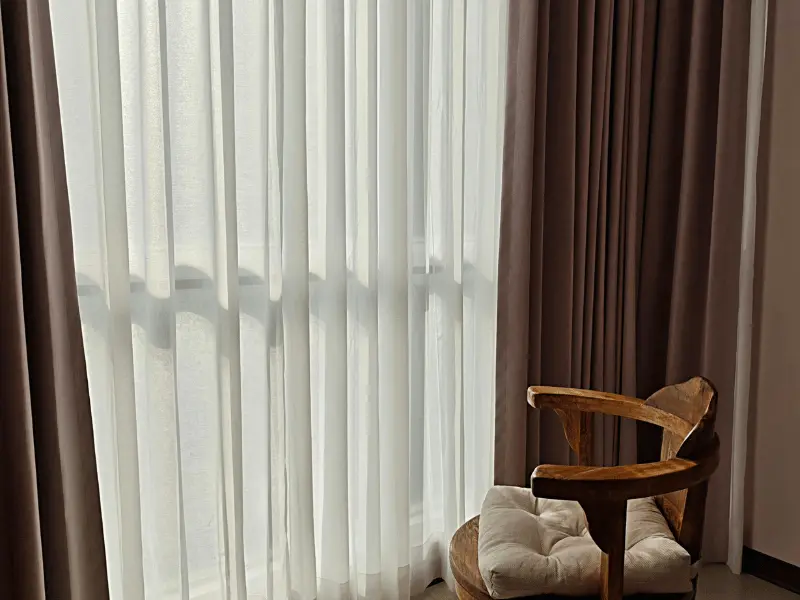
Heavy curtains can help reduce reflections and soften some incoming noise, although they should not be described as a replacement for proper acoustic glazing or structural sound insulation.
For a home office, layered window treatment is often more useful than a single decorative curtain:
sheer layer + functional blind + heavier curtain.
This also helps control Dubai’s strong daylight and glare during screen work.
6. Create a private work zone without building a wall
Not everyone has a spare room.
A studio or one-bedroom apartment may require the office to share space with the living room, bedroom or dining area.
That does not mean the workspace has to remain completely exposed.
You can create a visual and partial acoustic boundary using:
- Slatted timber screens
- Frosted or textured glass
- Open shelving
- Freestanding acoustic screens
- Full-height curtains
- Joinery partitions
- A strategically positioned bookcase
The important distinction is that these solutions create zoning rather than pretending to create complete soundproofing.
For example, a slatted divider can stop the desk from being visually exposed to the sofa while maintaining daylight and openness.
A curtain can create stronger visual separation when a private call starts.
This approach is particularly useful for renters because many solutions can be installed without permanently altering the apartment.
7. Put distance between your microphone and the noise source
Interior design cannot solve every acoustic problem.
Sometimes the best solution is simply to change the relationship between your workspace and the source of noise.
Imagine a living room with the kitchen on one side and a window overlooking a busy road on the other.
Putting the desk directly between both sources creates a difficult working environment.
Instead, orient the desk so that the main noise sources are behind a greater amount of furniture, storage or soft material.
For example:
Window → curtains → seating/storage → desk
can be acoustically more comfortable than:
Window → desk → microphone.
The same principle applies to the kitchen.
If your workspace must be in an open-plan living area, avoid placing the microphone directly toward the kitchen, television or entrance.
This is a small planning decision, but it can make an immediate difference to calls.
8. Design for the person on the other side of the call
Privacy is not only about preventing you from hearing other people.
It also means preventing other people from hearing you.
This becomes important when you work with confidential information, conduct interviews, speak with clients or simply need to talk without everyone in the apartment hearing the conversation.
Ask three questions when planning your home office:
Can I hear them?
Can they hear me?
Can someone outside this room see what is on my screen?
The third question is frequently overlooked.
A desk positioned directly opposite an open doorway may allow people walking through the home to see your monitor. Rotate the desk, introduce a screen or use furniture to create a visual buffer.
For sensitive work, position screens away from direct sightlines and avoid placing your desk where visitors naturally walk behind you.
Privacy is therefore both acoustic and visual.
9. Use furniture as part of the acoustic strategy
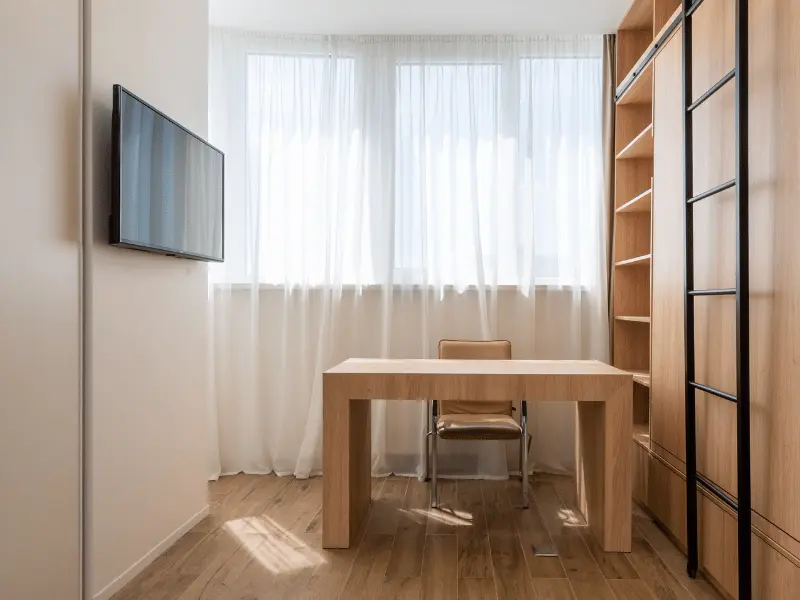
Furniture does more than fill a room.
A large bookshelf, upholstered chair, fabric sofa or storage unit can change how sound behaves inside a space.
This is especially valuable when you cannot modify walls.
A floor-to-ceiling bookcase filled with books creates an irregular surface rather than a large flat reflective wall. A rug reduces hard-floor reflections. An upholstered chair introduces another soft surface.
The trick is to use these elements deliberately rather than randomly.
For example, if your room feels excessively echoey, adding one decorative
This is why good home office interior design is not simply about making a room look professional; it is about controlling how the room behaves.
10. Create a “call mode” for the room
A Dubai home office often has to perform several jobs.
It may be:
- A workspace during the day
- A study in the evening
- A guest room occasionally
- A storage area
- A content-creation space
Instead of designing the room around one permanent condition, create features that allow it to switch into call mode.
For example:
Normal mode:
Curtains open, room bright, secondary seating available.
Call mode:
Curtains closed, camera background cleared, task lighting adjusted, door closed and unnecessary equipment hidden.
Integrated storage is particularly useful here.
A built-in cabinet can hide printers, paperwork, chargers and other equipment. A concealed cable-management system keeps the desk clear. A movable acoustic screen can be positioned when privacy is required and stored when it is not.
The result is a workspace that adapts to your day rather than forcing the entire room to behave like an office.
What is the best noise and privacy solution for a Dubai home office?
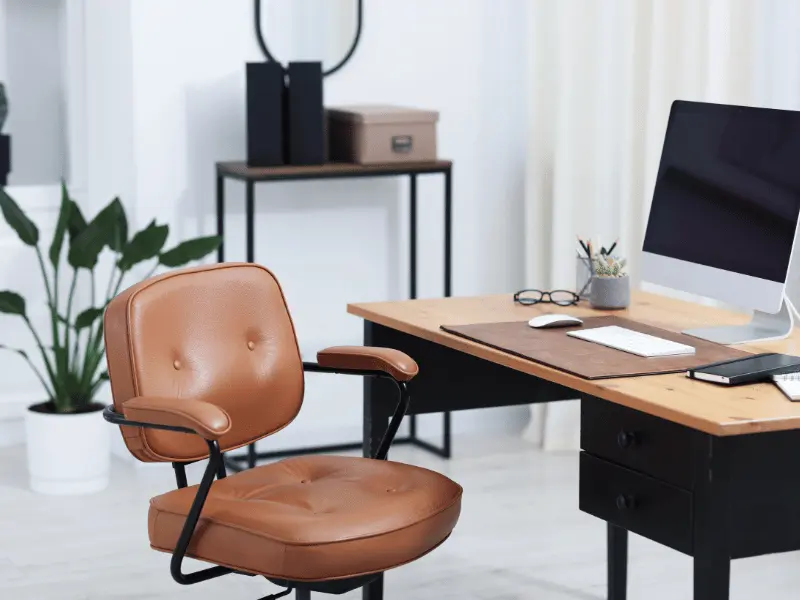
There is no single solution that works for every home.
If you live in a villa with a spare room, the priority may be door and wall separation.
If you live in a high-rise apartment, the priority may be window treatment, layout and acoustic absorption.
If you live in a studio, the priority may be zoning and visual privacy.
If you rent, reversible solutions such as curtains, rugs, freestanding screens and furniture-based zoning may make more sense than permanent construction.
And if your work involves frequent confidential calls, a dedicated room with a properly sealed door will generally give you a stronger privacy baseline than an open desk in a living area.
The important point is to identify the actual source of the problem before spending money.
A practical Dubai home-office checklist
Before buying acoustic panels or ordering custom furniture, walk through your home office and ask:
Noise coming in
- Where is the loudest sound entering?
- Is it coming through the door, window, wall or open-plan space?
- Is the desk facing the noise source?
Noise going out
- Can people in other rooms hear your calls?
- Is there a door?
- Are there obvious gaps around it?
Echo
- Does your voice sound hollow during recordings?
- Are most of the room’s surfaces hard?
- Could a rug, curtains and upholstered furniture improve the room?
Visual privacy
- Can someone see your monitor while walking past?
- Is your camera showing the kitchen, bedroom or personal belongings?
- Can a screen or joinery change the sightline?
Daily practicality
- Do you have enough storage?
- Are cables hidden?
- Can the room be used for something else when work ends?
Answering these questions will usually reveal more than buying another “home office accessory.”
Final thoughts
Working from home in Dubai does not require a huge dedicated office.
It requires intentional separation.
The most effective home offices combine space planning, acoustic absorption, visual screening, furniture placement, window control and—where necessary—proper sound-isolating construction.
The biggest mistake is treating noise and privacy as finishing touches.
They should be considered at the beginning of the interior design process.
A beautiful desk cannot compensate for a workspace positioned beside a noisy kitchen. Acoustic panels cannot fix every sound entering through a poorly sealed window. And a stylish open-plan office cannot provide the same privacy as a properly separated room.
The best solution is therefore not necessarily the most expensive one.
Start with the noise source. Then change the layout. Then add absorption. Then address privacy.
That sequence can turn a corner of a Dubai apartment into a workspace that feels quieter, more private and considerably more professional—without making the home feel like an office.
Related posts:
 How to Design a Playroom That Actually Works for Your Home
 How to Choose the Perfect Colors for Your Living Room | Room Color Guide
 Why Your 2BHK Feels Smaller After Furnishing (Designer Layout Breakdown + Fixes)
 How to Design Around Low Ceilings in Older Dubai Apartments (2026 Guide)
 Why Your Apartment Looks Cheap — And How to Fix It in 1 Week
 How to Create a Luxury Home Interior Without Overspending
 Where to Buy Budget Interiors in the UAE That Don’t Look Cheap
 Are mirrored wardrobes a good idea? (Pros and Cons)
 The Right Way to Fix Up a Home for Sale
 The Science of Soundproofing: Best Materials for a Quiet Home
 What’s the Best Layout for a Studio Apartment? Expert Tips Inside
 Outdoor Furniture for Small Balconies: Big Style in Compact Spaces
0 Comments